Discover how Italian extra virgin olive oil is made, the regions famous for exceptional oils, its health benefits, and how to choose a bottle worth bringing home.
There is a particular moment in the Italian countryside when autumn becomes something you can taste.
The mornings are cooler, the hills turn golden, and families gather beneath centuries-old olive trees. Nets are spread across the earth, ladders appear between silver-green branches, and the olive harvest begins.
In Italy, this season is known as la raccolta delle olive.
For generations, olive oil has been much more than an ingredient in Italian kitchens. It is part of the landscape, the culture, and the rhythm of everyday life.
A drizzle over warm bread, a spoonful in a pot of beans, or the finishing touch on freshly cooked vegetables can transform the simplest meal into something memorable.
But how does an olive become that beautiful golden-green oil? And what makes one Italian extra virgin olive oil different from another?
Let’s follow the journey from the olive grove to the Italian table.
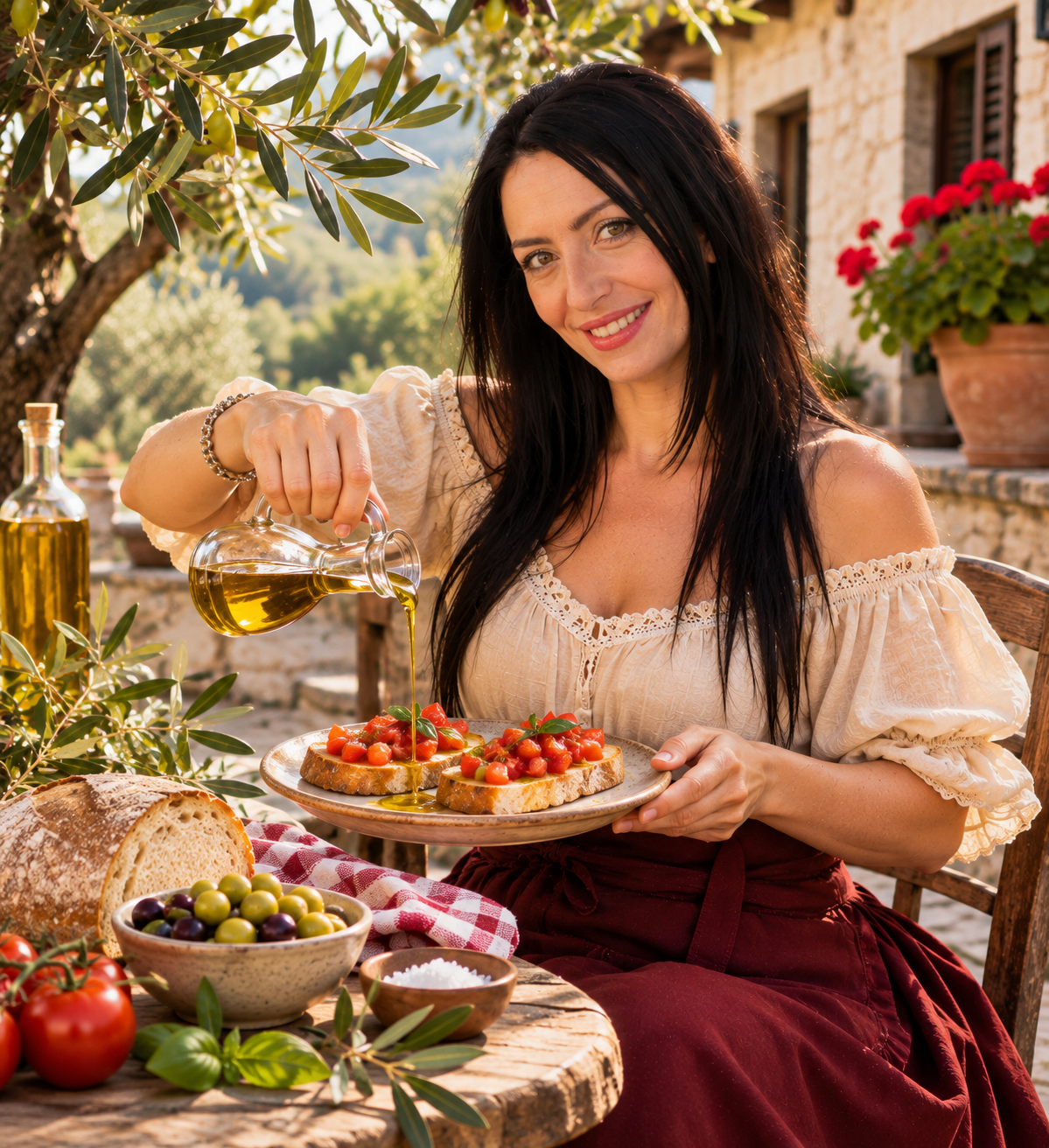
1. The Italian Olive Harvest: A Tradition That Begins in Autumn
In many Italian regions, the olive harvest begins in October and continues through November or December. In some areas, harvesting extends into winter, depending on the climate, olive variety, and desired ripeness.
Harvesting time matters.
Olives picked earlier, while still green, often produce oils with more pronounced grassy, bitter, and peppery characteristics. Riper olives may produce softer, rounder flavors.
Throughout Italy, growers use both traditional and modern harvesting methods.
Some olives are picked by hand. Others are collected with mechanical combs or vibrating tools that help release the fruit onto nets spread beneath the trees.
The goal is to collect healthy olives while minimizing damage.
In smaller family groves, the harvest can still be a social occasion, bringing relatives and neighbors together for days of work.
And at the end of the day, there is often a reward: the anticipation of tasting the season’s first olive oil.
2. From Olives to Oil: How Extra Virgin Olive Oil Is Made
The transformation takes place at the frantoio, the olive mill.
Although the expression “cold-pressed olive oil” remains popular, many modern mills use centrifugation rather than traditional presses.
The process typically involves six stages.
Step 1: Harvesting and transportation
Fresh olives are collected and transported to the mill as quickly as possible.
Delays, bruising, and poor storage can encourage fermentation and reduce quality.
Step 2: Cleaning and washing
Leaves, small branches, dust, and other debris are removed.
The olives are then washed before processing.
Step 3: Crushing
The olives, including their pits, are crushed into a thick paste.
Traditional mills used enormous stone wheels. Modern facilities often use mechanical crushers.
Step 4: Malaxation
The olive paste is gently mixed, allowing tiny droplets of oil to combine into larger ones.
This stage is essential for efficient extraction and influences the oil’s aroma and flavor.
For olive oil labeled cold extraction under European rules, the relevant extraction process must remain below 27°C (80.6°F).
Step 5: Extraction
Modern mills commonly use centrifuges to separate the oil from water and solid olive material.
The resulting oil may then undergo further separation or filtration.
Step 6: Storage and bottling
Fresh olive oil is stored in suitable containers, often stainless-steel tanks, protected from excessive oxygen, heat, and light.
It is eventually bottled, ready to travel from the Italian countryside to kitchens around the world.
The remarkable part? True virgin olive oil is obtained through mechanical or physical processes, without chemical refining.
3. What Does Extra Virgin Olive Oil Really Mean?
Not every bottle labeled olive oil is the same.
Extra virgin olive oil (EVOO) is the highest recognized grade of virgin olive oil.
To qualify, it must meet specific chemical and sensory standards, including free acidity no higher than 0.8%.
It must also be free of sensory defects and demonstrate positive fruity characteristics.
Virgin olive oil allows a higher acidity limit and may have minor sensory defects.
Ordinary products labeled simply “olive oil” often contain a blend of refined olive oil and virgin olive oils.
One important detail: acidity in olive oil is not the same as the sourness you taste in vinegar or lemon juice. It is a laboratory measurement related to free fatty acids.
And a beautiful green color does not automatically guarantee superior quality.
4. The Best Italian Olive Oils: Five Regions Worth Exploring
Italy produces an extraordinary variety of olive oils.
There is no single “best Italian olive oil” for every palate. Olive varieties, geography, climate, harvest timing, and milling techniques all contribute to the final flavor.
Here are five regions worth discovering.
Tuscany: Bold and Peppery
Tuscan extra virgin olive oils are often prized for their green, grassy aromas, pleasant bitterness, and peppery finish.
Look for Toscano IGP and oils from recognized Tuscan production areas.
Best enjoyed with: toasted bread, cannellini beans, grilled vegetables, and ribollita.
Puglia: The Heart of Italian Olive Growing
Puglia is one of Italy’s most important olive-growing regions, with landscapes dotted by ancient olive trees.
Its oils vary considerably, from fruity and balanced to intensely grassy and robust.
Look for protected names such as Terra di Bari DOP and Terra d’Otranto DOP.
Best enjoyed with: roasted vegetables, legumes, bruschetta, and grilled meats.
Sicily: Sunshine in a Bottle
Sicilian olive oils can offer aromas of tomato leaf, herbs, almonds, and fresh green fruit.
The island’s diverse olive varieties and growing conditions create an exciting range of flavors.
Look for Val di Mazara DOP, Monti Iblei DOP, or Sicilia IGP.
Best enjoyed with: grilled fish, caponata, fresh tomatoes, and Mediterranean salads.
Liguria: Delicate and Elegant
Liguria is particularly associated with the Taggiasca olive.
Many Ligurian oils have a delicate, harmonious profile, with softer bitterness and notes reminiscent of almonds.
Look for Riviera Ligure DOP.
Best enjoyed with: pesto, seafood, steamed vegetables, and delicate fish dishes.
Umbria: Green, Grassy, and Characterful
Umbria produces expressive extra virgin olive oils, often featuring herbaceous aromas and a pleasantly bitter or peppery finish.
Look for Umbria DOP.
Best enjoyed with: lentil soup, mushrooms, roasted potatoes, and grilled bread.
A Dolce Vita tip: Rather than choosing an oil based only on the region, explore the olive variety, harvest year, producer, and flavor profile. Two excellent oils from the same region can taste surprisingly different.
5. Is Extra Virgin Olive Oil Good for You?
Olive oil is a central ingredient in the Mediterranean dietary pattern, which emphasizes vegetables, legumes, fruit, whole grains, nuts, and other minimally processed foods.
Its nutritional value comes primarily from its fatty-acid composition and, particularly in extra virgin oils, naturally occurring minor compounds.
Heart-friendly fats
Olive oil is rich in monounsaturated fatty acids, especially oleic acid.
Replacing some saturated fats with oils high in oleic acid may help reduce the risk of coronary heart disease.
The important word is replacing, not simply adding more oil to an already calorie-rich diet.
Natural antioxidants
Extra virgin olive oil contains phenolic compounds and vitamin E.
These compounds contribute to its antioxidant properties, although their concentrations vary depending on the olives, production methods, and storage.
A valuable part of Mediterranean eating
Research supports Mediterranean-style dietary patterns for cardiovascular health.
Olive oil can be an important part of that pattern, but it is not a miracle ingredient or a substitute for an otherwise balanced diet.
What about calories?
One tablespoon of olive oil contains approximately 120 calories.
It is nutritious, but it is still a concentrated source of energy.
The goal is to use it thoughtfully, not to pour it over everything in unlimited quantities.
6. How to Choose a Good Italian Olive Oil in the United States
Standing in front of a supermarket shelf filled with olive oil bottles can feel overwhelming.
Here are a few things worth checking.
Look for extra virgin. This identifies the highest grade of virgin olive oil.
Check the origin. “Bottled in Italy” does not necessarily mean the olives were grown in Italy. Look for clear information about where the olives were harvested and the oil produced.
Look for a harvest date. When available, it helps you assess freshness. A best-before date alone does not tell you when the olives were picked.
Consider DOP or IGP certification. These European geographical indications establish requirements concerning origin and production. They are useful authenticity signals, although they do not guarantee that every bottle will suit your taste.
Choose protective packaging. Dark glass bottles and tins help shield oil from light.
Buy an amount you will use. Olive oil gradually loses freshness after opening, particularly when exposed to heat, light, and oxygen.
And remember: expensive does not always mean better.
A fresh, carefully produced oil that you enjoy is far more valuable in your kitchen than a prestigious bottle left untouched for years.
7. How to Taste Olive Oil Like an Italian
You do not need to be a professional olive oil taster to appreciate a beautiful EVOO.
Pour a small amount into a glass or tasting cup.
Warm it gently in your hands and smell the aroma.
Does it remind you of freshly cut grass, green tomatoes, herbs, almonds, or ripe fruit?
Then taste a little.
Notice the fruitiness, the bitterness, and the peppery sensation that may develop in your throat.
That little peppery kick is not necessarily a flaw. In fresh, high-quality extra virgin olive oil, bitterness and pungency are often desirable characteristics.
Professional tasters evaluate these qualities along with the absence of defects.
And once you start noticing the differences, you may never look at olive oil quite the same way again.
8. My Favorite Italian Way to Enjoy New Olive Oil
Sometimes the simplest traditions are the most beautiful.
In Italy, freshly produced olive oil is often celebrated with a slice of toasted country bread.
This is the spirit of fettunta, a Tuscan preparation closely related to bruschetta.
All you need is:
A thick slice of rustic bread
A clove of garlic
Fresh extra virgin olive oil
A pinch of salt
Toast the bread until golden.
Rub it lightly with the cut garlic clove, drizzle generously with good extra virgin olive oil, and finish with a little salt.
Eat it while the bread is still warm.
No complicated ingredients. No elaborate preparation.
Just bread, olive oil, and a little piece of Italy.
9. The Beauty of the Italian Olive Harvest
There is something deeply comforting about the olive harvest.
The trees may be centuries old, but every autumn they begin another chapter.
Families return to the groves. Mills come alive. The first bottles of olio nuovo, or new-season olive oil, appear on kitchen tables.
And across Italy, people celebrate something that is both ordinary and extraordinary: the transformation of a humble fruit into one of the most beloved ingredients in Mediterranean cooking.
Perhaps that is one of the most beautiful lessons of la dolce vita.
Good living does not always require luxury.
Sometimes it begins with a walk through the countryside, a loaf of fresh bread, and a little golden-green olive oil.
Don’t forget to be unforgettable.
La Dolce Vita Dream
⸻
Frequently Asked Questions About Italian Olive Oil
When are olives harvested in Italy?
Generally from October through winter, depending on the region, weather, olive variety, and desired ripeness.
Is extra virgin olive oil better than regular olive oil?
Extra virgin is the highest grade of virgin olive oil and retains naturally occurring flavors and minor compounds. Regular olive oil may be more neutral because it usually contains refined oil.
Can you cook with extra virgin olive oil?
Yes. Extra virgin olive oil is suitable for many everyday cooking methods, including sautéing, roasting, and baking at appropriate temperatures. It is not reserved exclusively for salad dressings.
Does darker green olive oil mean better quality?
No. Color is influenced by pigments and other factors and is not a reliable measure of quality.
How should olive oil be stored?
Keep it tightly closed in a cool, dark cupboard, away from the stove and direct sunlight.
What is olio nuovo?
Olio nuovo means new oil. It refers to freshly produced olive oil from the current harvest, often appreciated for its vibrant aromas and intense flavor.