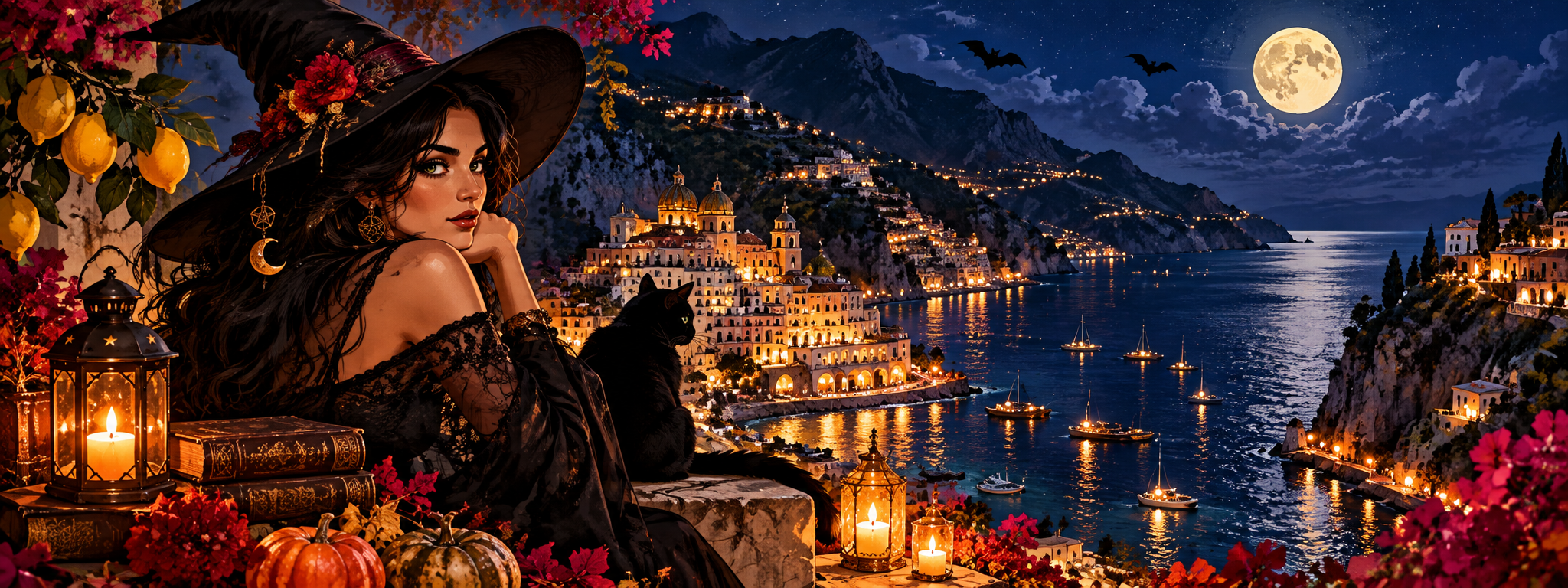
Discover how Italians celebrate Halloween, All Saints’ Day, and All Souls’ Day—from chocolate torrone and candlelit cemeteries to centuries-old legends and family traditions.
When you think of Halloween, you probably imagine carved pumpkins, haunted houses, elaborate costumes, and children running from door to door shouting, “Trick or treat!”
But what if I told you that in Italy, the days surrounding Halloween have a very different story to tell?
A story filled with candles, flowers, chocolate, ancient beliefs, and memories of loved ones who are no longer with us.
Growing up in Salerno, a beautiful city in Southern Italy, Halloween wasn’t the big celebration it is today. In fact, it only became noticeably popular during the 1990s, when American movies, television, and pop culture helped introduce it to a new generation.
Before that, our autumn traditions were centered around two important dates: November 1, All Saints’ Day, and November 2, All Souls’ Day.
And trust me, Italians have some fascinating traditions of their own.
Halloween Arrives in Italy (Or Should I Say “Aulin”?)
Halloween is celebrated in Italy today, especially among children, teenagers, and young adults. You’ll find costume parties, spooky decorations, themed events, and even the occasional trick-or-treating adventure.
But when I was growing up, Halloween was something we mostly saw in American movies.
It wasn’t a deeply rooted part of our family traditions.
And here’s something that still makes me laugh.
Some older Italians have a little trouble pronouncing the word Halloween. Instead, you might hear someone jokingly call it “Aulin.”
Yes, Aulin.
Which also happens to be the brand name of a painkiller in Italy.
Apparently, Halloween can give you a headache before the party even starts!
But long before Halloween costumes became popular, Italians already had meaningful ways of honoring this time of year.
November 1: Ognissanti, All Saints’ Day
November 1 is Ognissanti, also known as Tutti i Santi, or All Saints’ Day.
It’s a national holiday in Italy, traditionally dedicated to honoring all saints.
For many Italian families, it is also a time to gather, attend church, share a meal, and begin remembering relatives and friends who have passed away.
Shops and bakeries fill their windows with seasonal sweets, and chrysanthemums—flowers closely associated with remembrance in Italy—appear everywhere.
Unlike the bright orange pumpkins of American Halloween, the colors of this season in Italy often come from autumn flowers, candlelight, and the beautiful displays in local pastry shops.
And speaking of pastry shops…
Torrone dei Morti: A Delicious Southern Italian Tradition
If there’s one thing Italians know how to do, it’s bring food into almost every celebration.
Even a holiday dedicated to remembering the dead comes with something delicious.
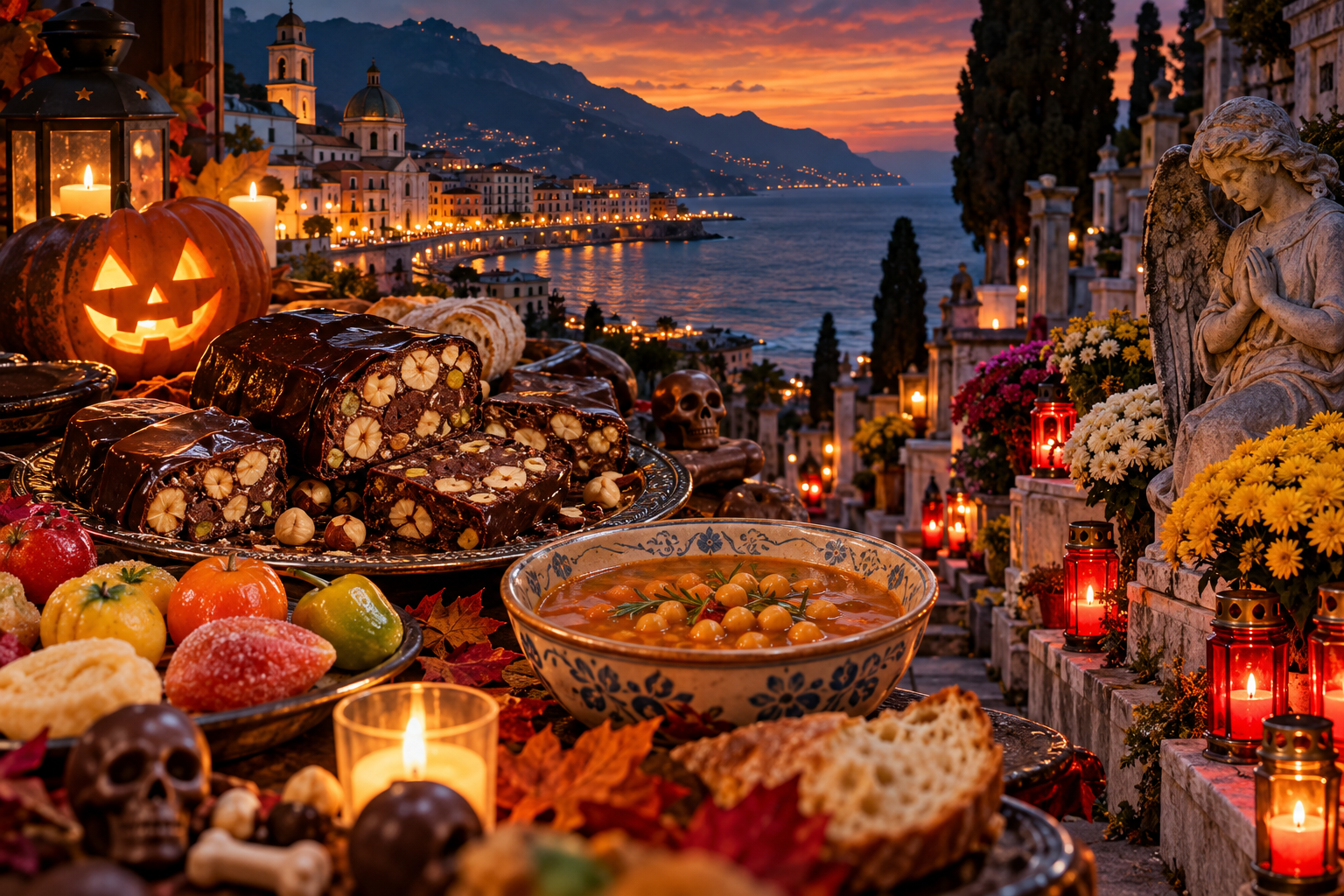
In Campania, particularly around Naples and Salerno, one of the most beloved seasonal treats is torrone dei morti, or nougat of the dead.
Despite the name, this is not your typical hard, chewy nougat.
Imagine a thick chocolate shell filled with a rich, creamy mixture of chocolate, hazelnuts, and other delicious ingredients.
Some versions include pistachios, coffee, or different kinds of chocolate.
It’s decadent, indulgent, and absolutely irresistible.
Growing up, torrone was one of the flavors I associated with this time of year.
And honestly, if there’s one way to make a solemn occasion a little sweeter, Italians have figured it out.
November 2: Il Giorno dei Morti
November 2 is the Commemorazione dei Defunti, commonly called Il Giorno dei Morti, or All Souls’ Day.
This is the day dedicated to remembering those who have passed away.
In many parts of Italy, families visit cemeteries, clean and decorate graves, bring flowers, light candles, and spend a quiet moment remembering loved ones.
It may sound sad, but I never experienced it as something frightening.
Growing up in Southern Italy, visiting the cemetery on November 2 was simply part of our family tradition.
It was about remembering people, honoring their lives, and keeping their presence alive through small gestures.
And then there was my mother’s chickpea soup.
Yes, chickpea soup!
In my family, a comforting bowl of zuppa di ceci was part of November 2.
Now, I can’t tell you whether that was an old local custom or simply a tradition my mother created.
But that’s the beautiful thing about family traditions.
Sometimes the things we remember most aren’t written in history books.
They’re the meals our mothers cooked, the familiar smells coming from the kitchen, and the little rituals that made an ordinary day feel special.
When the Dead Bring Gifts: A Sicilian Tradition
Now, here’s where Italian folklore becomes especially fascinating.
In Sicily, the Festa dei Morti has traditionally been a special occasion for children.
According to an old belief, during the night between November 1 and November 2, deceased family members return to visit their loved ones.
But instead of frightening the children, they bring them gifts!
Families traditionally hide sweets, toys, and small presents around the house for children to discover the next morning.
Among the traditional treats are frutta martorana, beautiful marzipan sweets shaped and painted to resemble real fruit, and pupi di zucchero, colorful sugar figures.
Imagine being a child and waking up to discover that your beloved grandparents or relatives had supposedly visited during the night and left you something sweet.
It’s a wonderfully different way of thinking about the relationship between the living and the dead.
Not simply as something frightening, but as a connection that love and memory can keep alive.
The Ancient Belief That Souls Return Home
Across different regions of Italy, old folk traditions have preserved stories about the souls of the dead returning to visit their families.
In some communities, people once left food or a place at the table for departed loved ones.
These customs varied from village to village, and many have faded with time.
But they reveal something fascinating about Italian folklore.
The boundary between the living and the dead was not always imagined as a completely closed door.
Sometimes it was a doorway that might open for just one night.
A candle in a window. A familiar meal. A prayer whispered into the darkness.
Not necessarily because people expected to see a ghost, but because remembering someone was a way of welcoming them home.
And isn’t that a beautiful—and slightly mysterious—thought?
Halloween in Italy Today: Old Traditions Meet New Celebrations
Today, Halloween and Italy’s older traditions coexist.
Children may dress up as witches, vampires, and skeletons on October 31.
Families may gather for All Saints’ Day on November 1.
And on November 2, many people continue to visit cemeteries and remember those who came before them.
One celebration doesn’t necessarily replace the others.
They simply tell different stories about how we understand life, death, memory, and the changing seasons.
And perhaps that’s what I love most about Italy.
Even when new traditions arrive, the old ones often find a way to remain.
In a recipe. In a flower placed on a grave. In a childhood memory.
Or in a mother’s bowl of chickpea soup.
A Little Italian Magic to Take Home
Whether you celebrate Halloween with costumes and candy or prefer the quiet beauty of candlelight and autumn traditions, there’s something special about this time of year.
It’s a season for stories, memories, and perhaps a little magic.
And if you love witches, mysterious legends, and Italian folklore, I have something you might enjoy!
Discover Streghe – The Witches of Italy, my Italian-inspired coloring book.
Explore the fascinating world of Italian witches and folklore while bringing the illustrations to life with your own colors.
It’s a creative way to relax, discover a little Italian magic, and enjoy a touch of mystery any time of year.
Find Streghe – The Witches of Italy on Amazon:
Disclosure: This is my own book. If you purchase it through the link above, I may earn royalties from the sale. Thank you for supporting my creative work!
And remember…
Don’t forget to be unforgettable.
La Dolce Vita Dream