How to Preserve Fresh Basil: Easy Olive Oil Freezer Cubes
Fresh basil is one of the most beautiful flavors of summer, but it can wilt surprisingly fast. If your garden is producing more basil than you can use, freezing it with olive oil is an easy way to preserve fresh herbs, reduce food waste, and add instant Mediterranean flavor to your favorite recipes.
These simple basil freezer cubes are perfect for pasta, pizza, soups, vegetables, chicken, fish, and homemade sauces.
Affiliate Disclosure: This post contains affiliate links. As an Amazon Associate, I may earn from qualifying purchases at no additional cost to you.
Why Freeze Basil with Olive Oil?
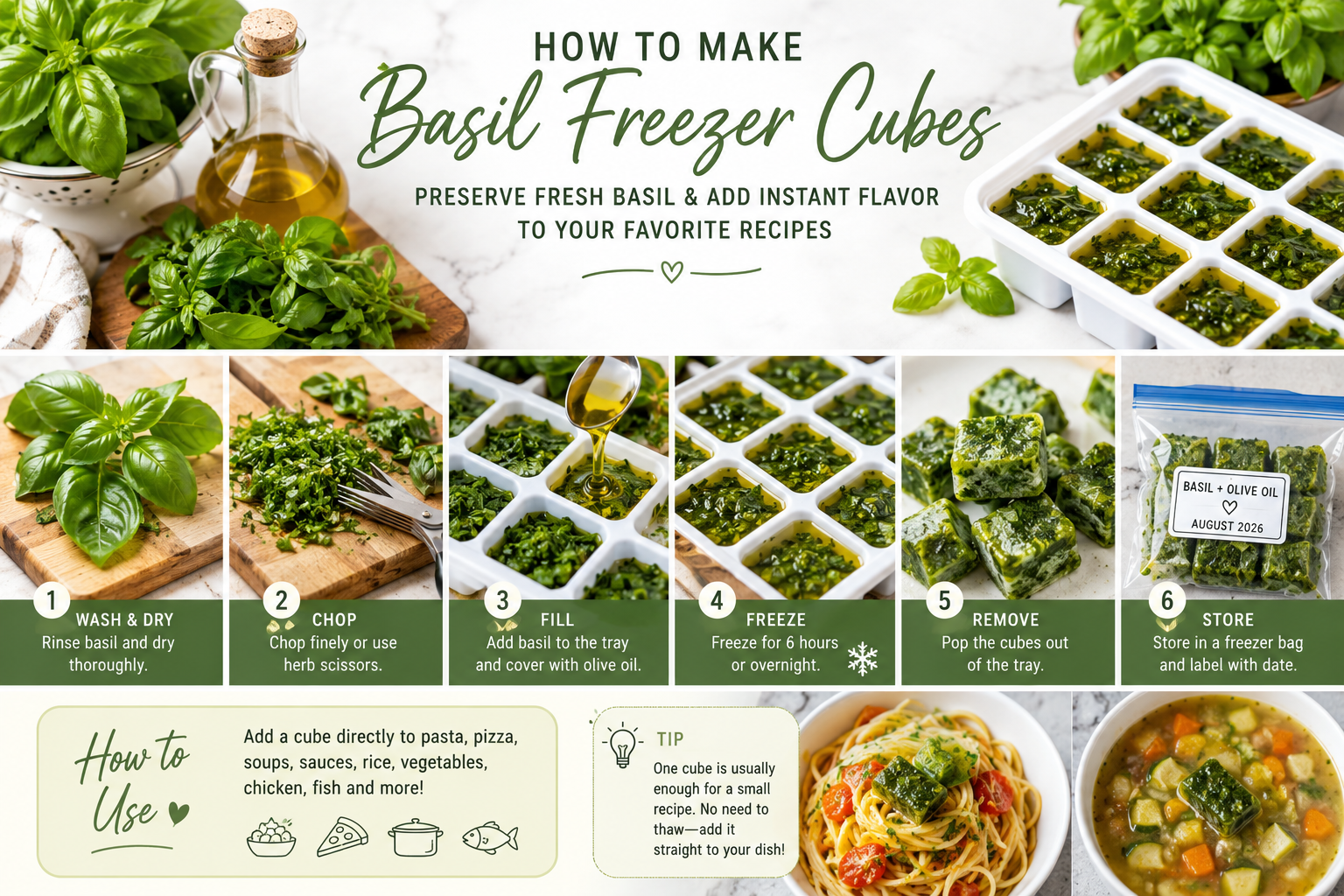
Fresh basil can become dark and wilted after only a few days in the refrigerator. Freezing it with extra-virgin olive oil helps preserve its aroma and creates convenient portions that are ready whenever you cook.
This method is especially helpful because it:
Reduces kitchen waste
Preserves extra garden basil
Makes weeknight cooking faster
Creates easy individual portions
Adds fresh Mediterranean flavor to everyday meals
The basil may become slightly darker after freezing, but it will still taste delicious in cooked recipes.
What You Need
Fresh basil leaves
Extra-virgin olive oil
A small pinch of salt, optional
Silicone freezer trays with lids
A sharp knife, herb scissors, blender, or food processor
Freezer-safe bags or airtight containers
How to Make Basil and Olive Oil Freezer Cubes
1. Choose Fresh Basil
Select healthy, bright green leaves. Remove any yellow, blackened, or damaged leaves and discard thick stems.
2. Wash and Dry the Basil
Rinse the basil gently under cool water.
Dry it thoroughly with a clean kitchen towel or paper towels. This step is important because excess moisture can create ice crystals and dilute the basil flavor.
3. Chop or Blend
Finely chop the basil with a knife or herb scissors.
For a smoother mixture, pulse the basil briefly in a small blender or food processor with a little olive oil. Avoid overblending it into a completely smooth liquid.
4. Fill the Freezer Tray
Divide the chopped basil among the compartments of a silicone freezer tray.
Pour enough extra-virgin olive oil over the basil to cover it. Leave a small amount of space at the top of each compartment.
Add a tiny pinch of salt, if desired.
5. Freeze
Cover the tray and place it on a flat surface in the freezer.
Freeze for at least 6 hours or overnight, until the cubes are completely solid.
6. Store the Cubes
Remove the frozen basil cubes and transfer them to a labeled freezer-safe bag or airtight container.
Write the name and date on the container:
Basil + Extra-Virgin Olive Oil
Prepared: [Month and Year]
How Long Do Basil Freezer Cubes Last?
For the best aroma and flavor, use the cubes within 3 to 4 months.
They can often be kept for up to 6 months when sealed properly, although the basil flavor may gradually become less intense.
How to Use Frozen Basil Cubes
There is usually no need to thaw them first. Add a cube directly to:
Tomato sauce
Pasta
Homemade pizza
Minestrone
Vegetable soups
Sautéed spinach or zucchini
Roasted vegetables
Chicken
Salmon or other fish
Risotto
Mediterranean vinaigrettes
One cube is often enough for a small recipe, depending on the size of your tray and how much basil you packed inside.
Disclosure: This section contains affiliate links
Helpful Amazon Finds for Preserving Fresh Herbs
DOQAUS Silicone Ice Cube Trays with Lids
These silicone trays are useful for freezing basil, pesto, broth, coffee, sauces, soup, and other homemade ingredients. The lids help protect the contents from freezer odors, and the flexible silicone makes the cubes easier to remove.
Shop the DOQAUS Ice Cube Trays on Amazon
WeeSprout Silicone Freezer Tray with Clip-On Lid
This freezer tray is another practical option for homemade herb cubes, sauces, baby food, broth, and meal-prep portions. The clip-on lid helps keep the tray covered and organized in the freezer.
Shop the WeeSprout Silicone Freezer Tray on Amazon
OXO Good Grips GreenSaver Herb Keeper
Not ready to freeze all your basil? An herb keeper can help fresh herbs last longer in the refrigerator while you decide how to use them.
The OXO GreenSaver Herb Keeper is designed to improve airflow and protect delicate herbs from becoming crushed or wilted too quickly.
Shop the OXO Good Grips GreenSaver Herb Keeper on Amazon
Cole & Mason Fresh Herb Keeper
This refrigerator storage container is designed for herbs and vegetables. It can be a helpful option for storing basil, parsley, cilantro, mint, and other delicate herbs before they are used or frozen.
Shop the Cole & Mason Fresh Herb Keeper on Amazon
Jenaluca 5-Blade Herb Scissors
Multi-blade herb scissors make it easy to chop basil, parsley, chives, cilantro, and other fresh herbs quickly and evenly.
They are especially convenient when preparing small batches of herb freezer cubes.
Shop the Jenaluca 5-Blade Herb Scissors on Amazon
Five-Herb Seed Variety Kit
Growing herbs at home is one of the easiest ways to keep fresh flavor available throughout the season.
This variety kit includes oregano, cilantro, parsley, basil, and chives, making it a fun option for a small kitchen garden or patio herb collection.
Shop the Five-Herb Seed Variety Kit on Amazon
Other Easy Ways to Preserve Fresh Herbs
You can use the same freezing method with:
Parsley
Cilantro
Chives
Oregano
Rosemary
Thyme
Sage
Softer herbs such as basil, cilantro, and parsley work especially well when chopped and frozen with olive oil.
Stronger herbs such as rosemary and thyme can also be frozen in broth, water, or olive oil, depending on how you plan to use them.
A Simple Way to Preserve Summer
Freezing basil with olive oil is an easy way to save extra herbs before they wilt. With only a few ingredients and a silicone freezer tray, you can create convenient flavor cubes for pasta, pizza, soups, vegetables, and seafood.
The next time your basil plant produces more leaves than you can use, turn them into freezer cubes and keep a little taste of summer ready for your next meal.