La Befana: Italy’s Sweet Goodbye to the Holidays
In Italy, Christmas doesn’t truly end on December 25th.
It lingers softly until January 6th, when an ancient and magical figure flies across the night sky on a broom: La Befana.
She is not young, not elegant, and not perfect.
Yet she remains one of the most beloved figures in Italian tradition — a gentle presence that helps children (and adults) say goodbye to the holidays.
⸻
The Origins of La Befana
The story of La Befana dates back to ancient times, long before Christianity.
In ancient Rome, this period marked the end of the agricultural year and symbolized renewal, transition, and hope for the future.
Over time, these beliefs blended with the Christian celebration of the Epiphany.
According to tradition, La Befana was a woman who refused to follow the Three Wise Men to visit the newborn Jesus. Later, filled with regret, she began searching for Him, carrying gifts for every child she encountered along the way.
She never stopped searching — and she still travels every year.
⸻
A Childhood Memory of Waiting for La Befana
As a child, on the evening of January 5th, I would sit by my bedroom window and look up at the sky.
I searched among the stars, hoping to spot a tiny magical woman flying on her broom — but I never found her.
It wasn’t until the next morning, at my very first movement, that I heard the soft crinkling sound of candy wrappers.
La Befana had arrived.
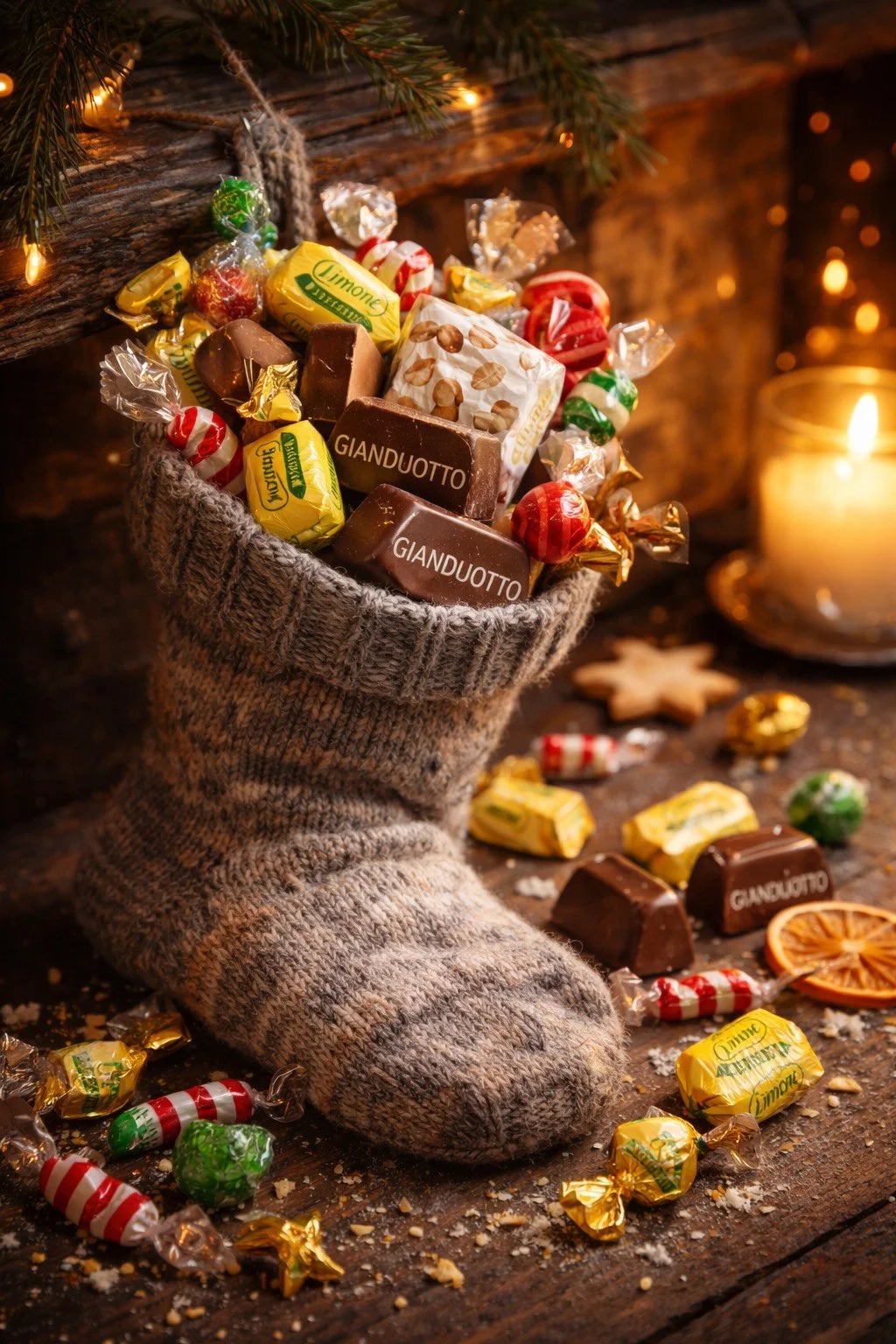
She always hung my calza — the traditional stocking — at the base of my bed, right above my head.
Sometimes, if I had been especially well-behaved, I would also find small gifts at the foot of the bed.
One year, unforgettable to me, she brought a large aviary filled with colorful birds.
Those birds brought joy to my childhood for many years to come.
⸻
Stockings, Sweets, and Italian Traditions
During the night between January 5th and 6th, La Befana:
• flies on her broom
• enters through windows or chimneys
• fills children’s stockings with sweets and small surprises
Inside the calza, children usually find:
• candies and chocolates
• small toys
• and the famous “coal,” which is actually made of sugar
Across Italy, towns and cities celebrate with:
• markets and festivals
• people dressed as La Befana
• symbolic bonfires to close the holiday season
There is a well-known Italian saying:
“L’Epifania tutte le feste porta via”
(The Epiphany takes all the holidays away.)
But La Befana does so gently.
⸻
A Sweet and Simple Tradition
There is no single official dessert for La Befana.
Each region celebrates differently, but all traditions share one thing: simplicity.
This day is often marked by:
• homemade cookies
• simple sweets
• flavors that taste like childhood
Very often, the most meaningful gesture isn’t the gift itself — but sharing something sweet together, early in the morning, before everyday life begins again.
⸻
Why La Befana Still Matters
La Befana is the comforting grandmother of Italian children.
She arrives when the holidays are ending, when school is about to start again, when January feels long and cold.
She doesn’t promise miracles — she offers reassurance.
She sweetens the path forward and reminds us that even the end of something beautiful can be gentle.
⸻
Closing
La Befana doesn’t only bring sweets or coal.
She brings tradition, comfort, and one last smile
before winter truly begins.